Introducing the AI Passport: A New Credential for the AI-Ready Student
Learn how Mindapt's AI Passport helps students demonstrate verified AI literacy skills to colleges and employers.
Introducing the AI Passport: A New Credential for the AI-Ready Student
As artificial intelligence becomes increasingly integrated into every industry, students need more than just exposure to AI—they need verified, demonstrable skills that set them apart. That's why we're excited to introduce the AI Passport, Mindapt's official credential for AI literacy.
The Challenge: Proving AI Competency
In conversations with college admissions officers and hiring managers, we heard the same concern repeatedly: "Everyone claims to know AI, but how do we verify that?"
Traditional transcripts don't capture AI literacy. Standardized tests don't measure it. And simply listing "familiar with ChatGPT" on a resume tells employers nothing about a student's actual capabilities.
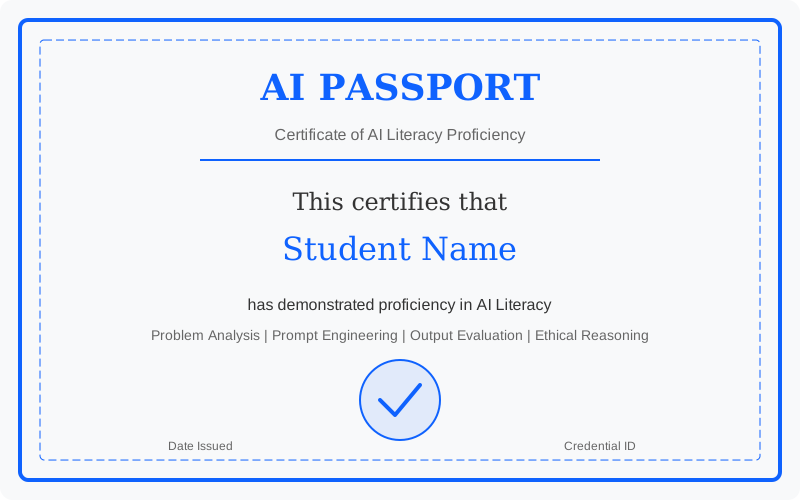
The AI Passport solves this problem by providing a standardized, verifiable credential that demonstrates genuine proficiency in working with AI systems.
What is the AI Passport?
The AI Passport is a comprehensive credential that students earn upon completing Mindapt's Core Course and demonstrating proficiency through our AI Assessment. Unlike simple completion certificates, the AI Passport represents verified proficiency across four critical dimensions:
The Four Pillars of AI Literacy
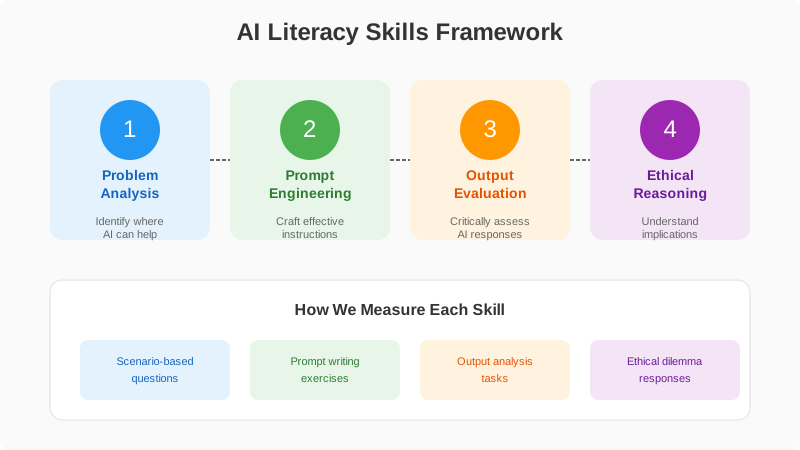
- Problem Analysis: The ability to break down complex problems and identify where AI can help—and where it can't. Students learn to recognize which tasks are well-suited for AI assistance and which require purely human judgment.
- Prompt Engineering: Crafting effective instructions that produce useful AI outputs. This goes beyond basic queries to include techniques for context-setting, constraint specification, and iterative refinement.
- Output Evaluation: Critically assessing AI-generated content for accuracy, bias, completeness, and appropriateness. Students develop a healthy skepticism and learn to verify AI outputs against reliable sources.
- Ethical Reasoning: Understanding the implications and responsibilities of AI use, including privacy considerations, attribution requirements, and the broader societal impact of AI technologies.
Why It Matters
For College Applications
Admissions officers are increasingly looking for evidence that students can navigate the AI-enhanced academic environment they'll encounter in college. The AI Passport demonstrates:
- Academic readiness for courses that incorporate AI tools
- Critical thinking skills essential for evaluating AI-assisted research
- Ethical awareness about appropriate AI use in academic contexts
"When we see an AI Passport on an application, we know this student has been thoughtfully prepared for the realities of AI in higher education." — Dr. Amanda Foster, Dean of Admissions
For Career Readiness
Employers across industries are seeking candidates who can work effectively with AI tools—not just use them, but use them responsibly and skillfully. The AI Passport provides tangible proof of these capabilities.
A recent survey of Fortune 500 companies found that 78% plan to incorporate AI literacy as a factor in entry-level hiring decisions within the next two years. Students with verified AI credentials will have a significant advantage.
How Students Earn the AI Passport
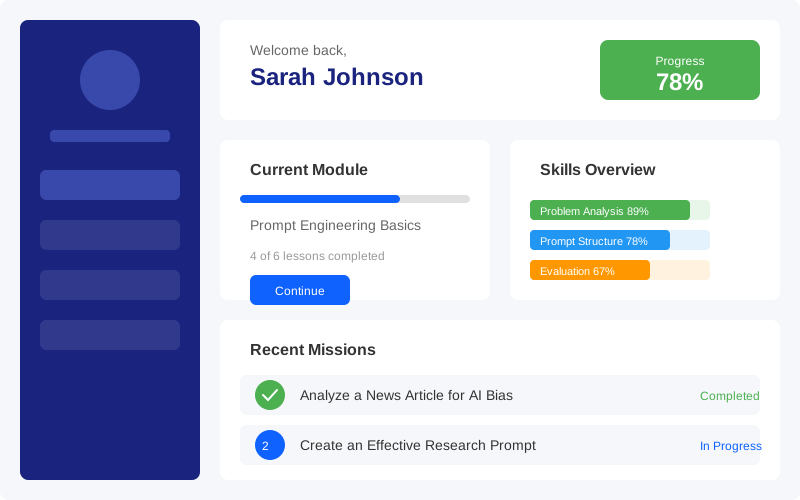
The journey to earning an AI Passport involves three key phases:
Phase 1: Core Learning
Students progress through Mindapt's Core Course, which covers:
- Fundamentals of how AI systems work
- Effective prompt engineering techniques
- Critical evaluation strategies
- Ethical frameworks for AI use
Each module includes interactive exercises, real-world scenarios, and checkpoint assessments to ensure understanding before progression.
Phase 2: Applied Practice
Through our Mission Library, students apply their learning to authentic challenges:
- Analyzing AI outputs for bias in news articles
- Crafting prompts for research assistance
- Evaluating AI-generated summaries against source materials
- Navigating ethical dilemmas in AI use scenarios
These missions aren't theoretical—they mirror the actual situations students will encounter in college and careers.
Phase 3: Assessment and Verification
Students complete our comprehensive AI Assessment both before and after the Core Course. This pre-post design measures genuine skill growth, ensuring that every AI Passport holder has truly mastered the fundamentals.
The assessment uses performance-based tasks, not multiple-choice questions. Students demonstrate their abilities by:
- Analyzing complex scenarios and proposing AI-assisted solutions
- Writing and refining actual prompts
- Evaluating real AI outputs and identifying issues
- Reasoning through ethical considerations
Verification and Recognition
Each AI Passport includes:
- Unique credential ID for employer/admissions verification
- Skill breakdown showing performance across all four dimensions
- Digital badge for LinkedIn and other professional profiles
- Verification portal where third parties can confirm authenticity
"We've seen a 40% increase in student engagement when they understand they're working toward a recognized credential." — Dr. Michael Torres, Partner School Principal
Early Results
Schools that have implemented the AI Passport program are seeing remarkable outcomes:
| Metric | Result |
|---|---|
| Course completion rate | 94% |
| Average skill improvement | +31% |
| Student satisfaction | 4.7/5 |
| Teacher recommendation rate | 96% |
Students report feeling more confident in their ability to use AI tools appropriately and more prepared for the AI-enhanced future they'll encounter in college and careers.
Get Started Today
Ready to help your students earn their AI Passport? We're currently onboarding schools for the spring semester.
Next Steps:
- Book a demo to see the full AI Passport program in action
- Review our implementation guide for administrators
- Connect with our team to discuss your school's specific needs
The future belongs to students who can work effectively with AI. The AI Passport helps them prove they're ready.